Why Product-Led Companies Choose AI-Native Partners
Product-led companies operate on a different rhythm than traditional businesses. Their roadmap doesn’t move quarter to quarter — it shifts week to week. They release fast, measure everything, and refine constantly. That kind of environment changes what they need from a development partner.
It’s not enough for a team to build features. They have to build systems that can learn, scale, and adapt. That’s where AI-native development partners come in. These companies don’t treat artificial intelligence as an add-on. They design architecture assuming automation, analytics, and data feedback loops will be built into the product from the beginning.
Canada has quietly become a strong market for this type of engineering. The talent pool is deep, and many firms here have experience building platforms that evolve continuously rather than launching once and staying static.
Below are development partners that product-driven companies often consider when they need that mindset.
1. Euristiq
Some development vendors emphasize speed. Others highlight cost or design. Euristiq tends to focus on something product companies value more over time — structural stability.
If you’re evaluating Euristiq custom software development in Canada, the first thing you’ll notice is their planning approach. Instead of jumping straight into development, they run a structured discovery phase designed to clarify requirements before production work begins.

Founded in 2016, Euristiq works with enterprise and mid-market organizations across North America and Europe, including companies such as Philips, Ryanair, Bell Canada, Interac, and Gen Digital. These are environments where unstable releases or unclear architecture simply aren’t acceptable.
Their core capabilities include:
- AI-native product design and development
- Structured discovery phase for detailed planning
- PoC and MVP delivery within defined timelines
- Legacy platform modernization
- Data engineering, analytics, IoT, and AIoT solutions
- Cloud systems across AWS, Azure, and Google Cloud
- Dedicated certified engineering teams
They’re ISO 27001:2022 certified and an AWS Advanced Tier Services Partner. Those credentials usually signal mature internal processes, which matters because product-led companies depend on partners who won’t slow iteration cycles.
Teams often bring Euristiq in when they want a partner capable of supporting both early validation and long-term scaling. Their emphasis on defining architecture early tends to prevent the kind of rework that delays product growth later.
2. Iversoft
Iversoft operates out of Ottawa and is commonly chosen for projects where infrastructure reliability and security requirements play a major role. AI-enabled products often operate in environments where compliance and data governance are part of the equation.
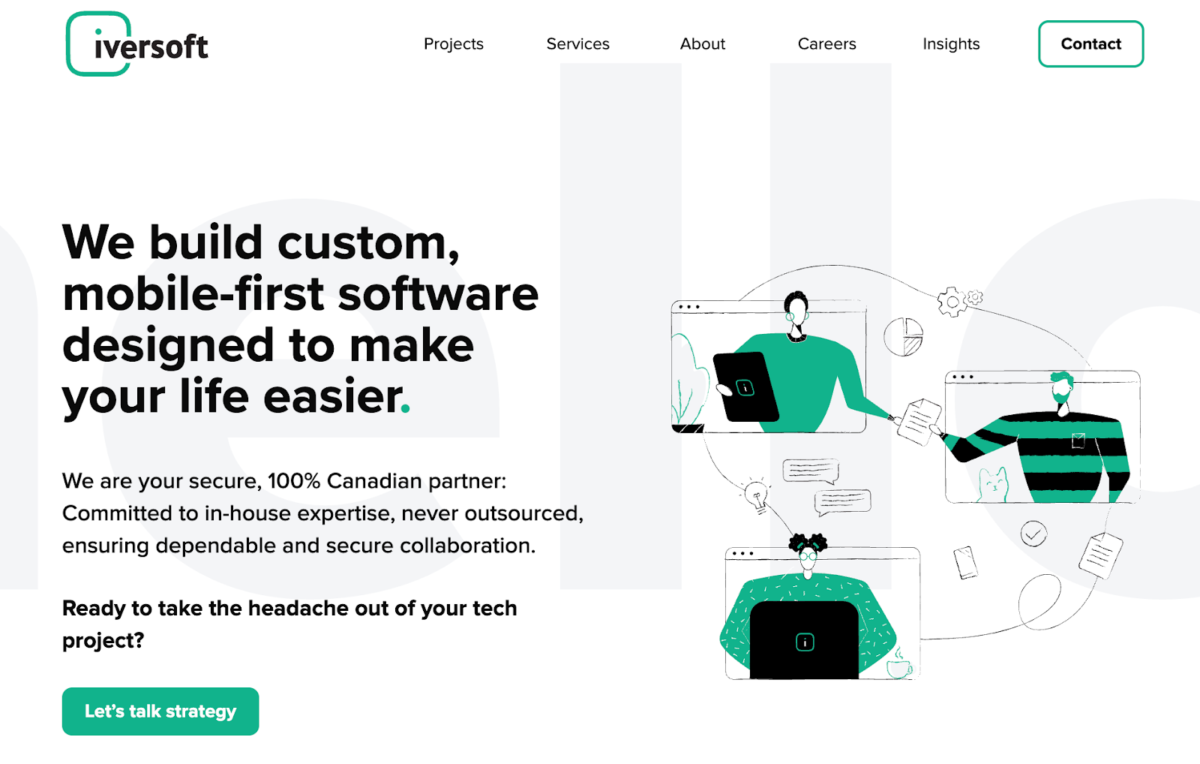
Their capabilities include:
- Secure application development
- Cloud architecture and deployment
- Mobile and web platforms
- System integration
When products need auditability, traceability, or strict access controls, architectural decisions become more complex. Teams experienced in regulated environments typically move faster because they design for those constraints from the start.
Organizations building platforms expected to operate under regulatory oversight often prioritize partners with that background.
3. Osedea
Montreal-based Osedea is frequently shortlisted by companies that want engineering teams working closely alongside internal product stakeholders. Their workflow leans heavily on collaboration and iteration rather than long delivery cycles.
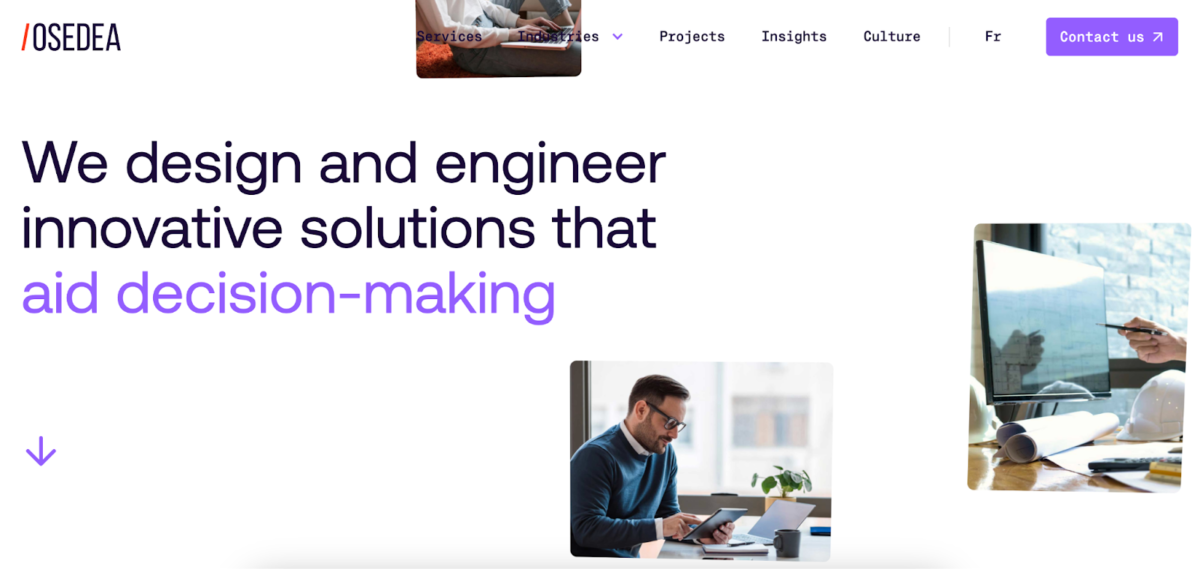
Their services include:
- Custom software product development
- Machine learning solutions
- UX-centered platform design
- Digital consulting
In product environments, misalignment is often a bigger risk than technical difficulty. Osedea’s model emphasizes short feedback loops and continuous validation, which helps teams catch mistakes early instead of discovering them after launch.
Companies that want visibility into progress and influence over decisions throughout development often prefer that kind of working style.
4. Kloudville
Kloudville tends to be brought into projects where data architecture or system integrations sit at the center of the product. Many AI-driven platforms fall into this category because they depend on pipelines, APIs, and distributed infrastructure functioning smoothly together.
Their core work includes:
- Cloud platform engineering
- Data infrastructure design
- API ecosystems
- Enterprise platform development
AI systems rarely fail because of their models. More often, they struggle because the surrounding infrastructure can’t handle real-world usage. Teams accustomed to distributed environments tend to identify scaling bottlenecks earlier, which keeps performance predictable as products grow.
For companies building analytics tools or data-heavy platforms, that infrastructure depth often matters more than experimental features.
5. Net Solutions
Net Solutions is often considered by organizations building products tied directly to launches, growth milestones, or investor timelines. They operate somewhere between a traditional development vendor and a product partner, which can matter when schedules are tied to market opportunities.
Their services include:
- Custom software development
- Product engineering
- UX-focused platform design
- Cloud-based applications
Teams with product instincts usually manage priorities differently. They distinguish between features that must ship now and those that can wait, which helps maintain realistic delivery timelines. That ability to prioritize is one reason product companies preparing for launches often evaluate partners like Net Solutions.
Why AI-Native Architecture Matters Early
Intelligent products place different demands on software foundations. They don’t just need features; they need systems that can collect usable data, support analysis, and allow improvement without major rewrites.
When those requirements aren’t planned early, problems tend to appear later. Logging may be incomplete. Metrics may be missing. Data may not be structured for training or optimization. Fixing those gaps after launch is far more difficult than planning for them during design.
That’s why product-led organizations increasingly look for teams that think about intelligence layers from day one, even if those capabilities won’t ship until later versions.
Signs a Development Partner Understands Product Thinking
Product companies often recognize strong vendor alignment quickly, not from code samples but from conversation patterns. Certain behaviors tend to signal that a team understands product environments:
- Asking about metrics instead of just features
- Wanting access to real user feedback
- Discussing scaling scenarios early
- Clarifying success criteria
- Questioning unclear assumptions
Those signals usually matter more than polished presentations or technical buzzwords.
The Real Reason Some Partnerships Last for Years
Product companies rarely expect to work with the same development partner forever. What they actually want is flexibility — a team that can scale with them when speed matters and step back cleanly when internal teams expand.
The strongest partners tend to understand that dynamic. They document systems thoroughly, write maintainable code, and avoid unnecessary lock-in. Ironically, vendors who make themselves easy to replace are often the ones clients keep the longest, because trust builds when incentives feel aligned.
What All Strong AI-Focused Vendors Have in Common
The companies listed above differ in size, specialization, and approach. Some emphasize infrastructure. Others focus on collaboration or compliance. But they share a pattern product-led organizations consistently value: they design for iteration.
Shipping software once is straightforward. Improving it continuously is where most teams struggle. Partners who build systems with change in mind make that process much easier.
Final Thoughts
Canada’s software development ecosystem is rich in technical talent. What separates one partner from another isn’t raw skill — it’s how well they understand the pressure and pace of product-driven companies.
If your roadmap depends on frequent releases, data-informed decisions, and features that evolve after launch, working with a team comfortable with AI-native thinking can prevent months of rework later.
Because in product-led environments, software is never really finished. It either keeps improving — or it becomes the bottleneck.